
The Era of Invisible Payments: How AI is Making the "Checkout" Disappear

Remember the last time you jumped out of an Uber and just... walked away? No fumbling for your wallet, no tapping a terminal, no signing a receipt. The payment just happened. That seamless moment represents a fundamental shift in how we think about transactions: and it's only the beginning.
Welcome to the era of invisible payments, where AI is quietly dismantling the checkout experience as we know it. For fintech founders and executives, this isn't just a tech trend to watch. It's a strategic imperative that's reshaping the entire payments landscape.
What Exactly Are Invisible Payments?
Invisible payments are transactions that occur automatically in the background without requiring users to swipe, tap, or enter payment details at checkout. The cognitive burden shifts entirely away from the consumer: no mental energy spent deciding how to pay, no friction interrupting the purchase journey.
The key difference from traditional payments? Intelligence. Legacy payment systems required visible, manual steps because they simply weren't smart enough to make autonomous decisions. AI changes everything by enabling systems to anticipate fraud, authenticate users based on behavioural patterns, and approve transactions in milliseconds: all without any user intervention.
Think about it: the best payment experience is one you don't even notice.

The AI Engine Behind Disappearing Checkouts
So what's actually making this possible? It comes down to predictive intelligence rather than simple execution.
Modern machine learning models evaluate hundreds of signals per transaction to assess risk and determine the optimal path forward. Should the payment be approved instantly? Does it need additional verification? Should the system suggest a different payment method? All of these decisions happen faster than you can blink.
The numbers tell the story. Visa's AI-powered platform prevented over $27 billion in fraud in 2023 alone. Mastercard achieved a 300% increase in detection accuracy for certain fraud types after shifting to deep learning models. PayPal's fraud AI continuously retrains itself on more than 1 billion daily transactions, enabling faster anomaly detection than any human analyst could dream of.
Transaction risk assessments now complete in under 200 milliseconds: evaluating creditworthiness during checkout without interrupting the flow. At peak capacity, Visa handles 65,000 transactions per second, with each one evaluated against multilayer neural networks trained on fraud patterns.
This is the invisible infrastructure that's making checkout obsolete.
The Technology Stack Powering Invisible Payments
Several interconnected technologies work together to create these frictionless experiences:
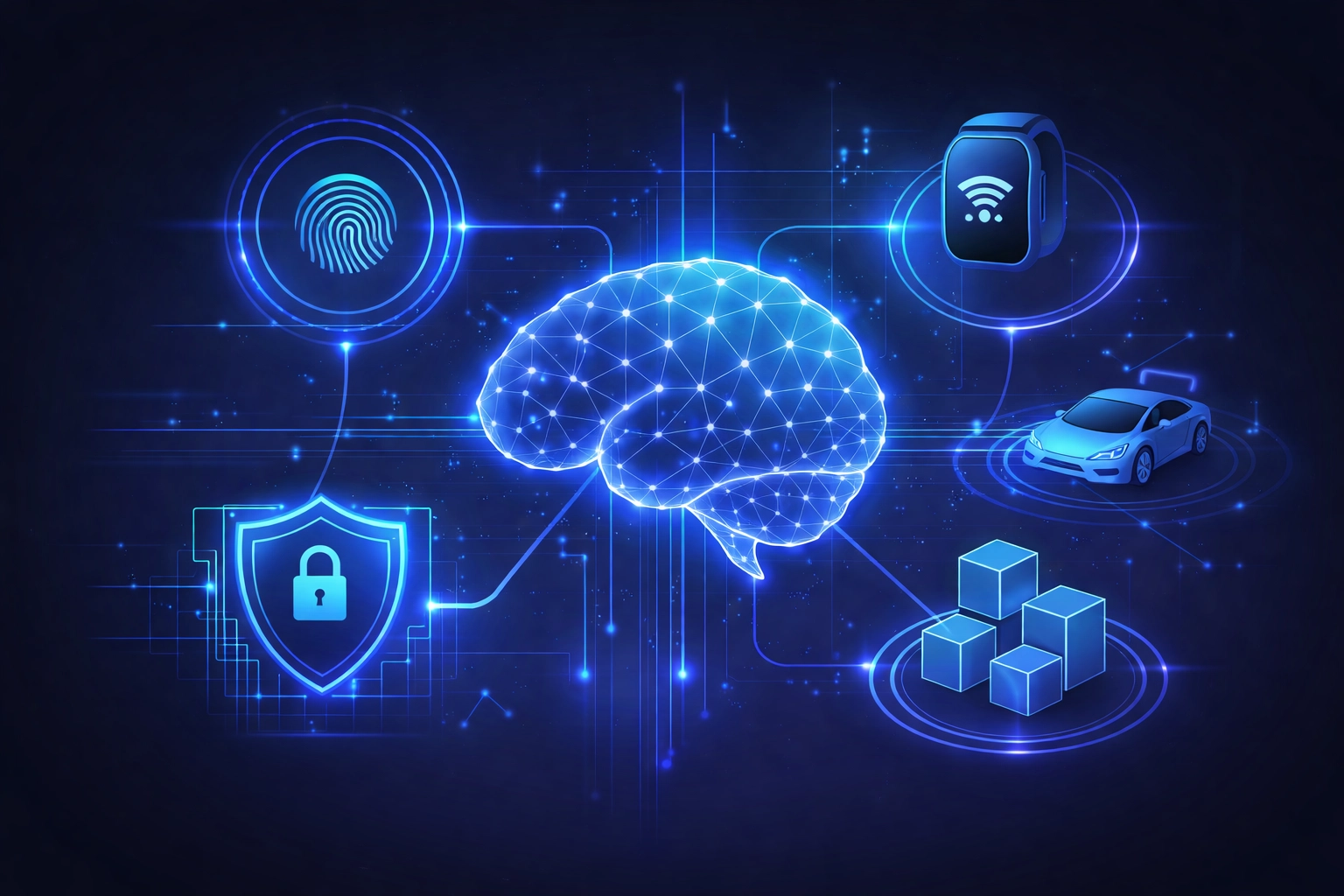
Tokenisation and Encryption
Security remains paramount, but it's now happening behind the scenes. Tokenisation replaces sensitive card data with unique identifiers, enabling secure processing without exposing actual credentials. This is the foundation that makes invisible payments both seamless and safe.
Biometric Authentication
Apple Pay and Google Pay have converted authentication into a thumb press or brief glance. No PINs to remember, no passwords to type. Your identity becomes the key.
IoT Integration
Sensors and radio frequency identification enable automatic charging without checkout steps. Amazon Go stores use cameras and RFID technology to charge customers as they exit: the epitome of invisible commerce.
Automatic Credential Updates
Here's one that solves a massive headache: Visa Account Updater reduces failed payments by 35–50% for participating merchants by automatically updating expired card information. No more declined transactions because a customer forgot to update their card details.
Real-World Examples You're Already Using
Invisible payments aren't some far-off future concept. They're already woven into your daily life:
Ride-Hailing Apps
Uber and similar services charge riders automatically upon arrival without additional authorisation steps. You rate your driver, step out, and you're done. The payment is an afterthought: or more accurately, not a thought at all.
Subscription Services
Netflix, Spotify, and countless other platforms process recurring charges with minimal user friction. You signed up once, and the money flows automatically month after month.
Cashier-Less Retail
Sam's Club's "scan and go" feature saw 50% growth over three years, with one in four customers now using it. The traditional checkout line is becoming a relic.
Connected Vehicles
Modern cars are increasingly handling tolls, parking fees, and even fuel payments autonomously. The vehicle becomes a payment device.
For fintechs, payment orchestration is becoming essential to manage these diverse payment channels and create unified invisible experiences.
What This Means for Your Fintech Strategy
If you're building in the fintech space, invisible payments demand a strategic rethink:
User Experience Is the Product
When payment becomes invisible, the experience around the transaction becomes your differentiator. The companies winning aren't necessarily those with the best payment technology: they're the ones removing the most friction from the entire customer journey.
Data Becomes Everything
AI-driven invisible payments require massive amounts of data to function effectively. The more signals you can capture: behavioural patterns, device fingerprints, location data, transaction history: the smarter your systems become. Building robust data infrastructure isn't optional anymore.
Security Must Be Proactive, Not Reactive
With payments happening automatically, the window for fraud detection shrinks dramatically. AI-driven fraud reduction achieves 20–50% improvement without introducing new customer verification steps. Your security needs to be embedded in the intelligence layer, not bolted on as an afterthought.
Embedded Finance Is the Battlefield
The future belongs to companies that can embed payment capabilities directly into non-financial experiences. As TradFi meets DeFi, the lines between financial and non-financial services continue to blur.
The Emerging Future: "Absent Payments"
Beyond invisible payments lies an even more radical concept: absent payments. This is where money moves before users consciously think about it.
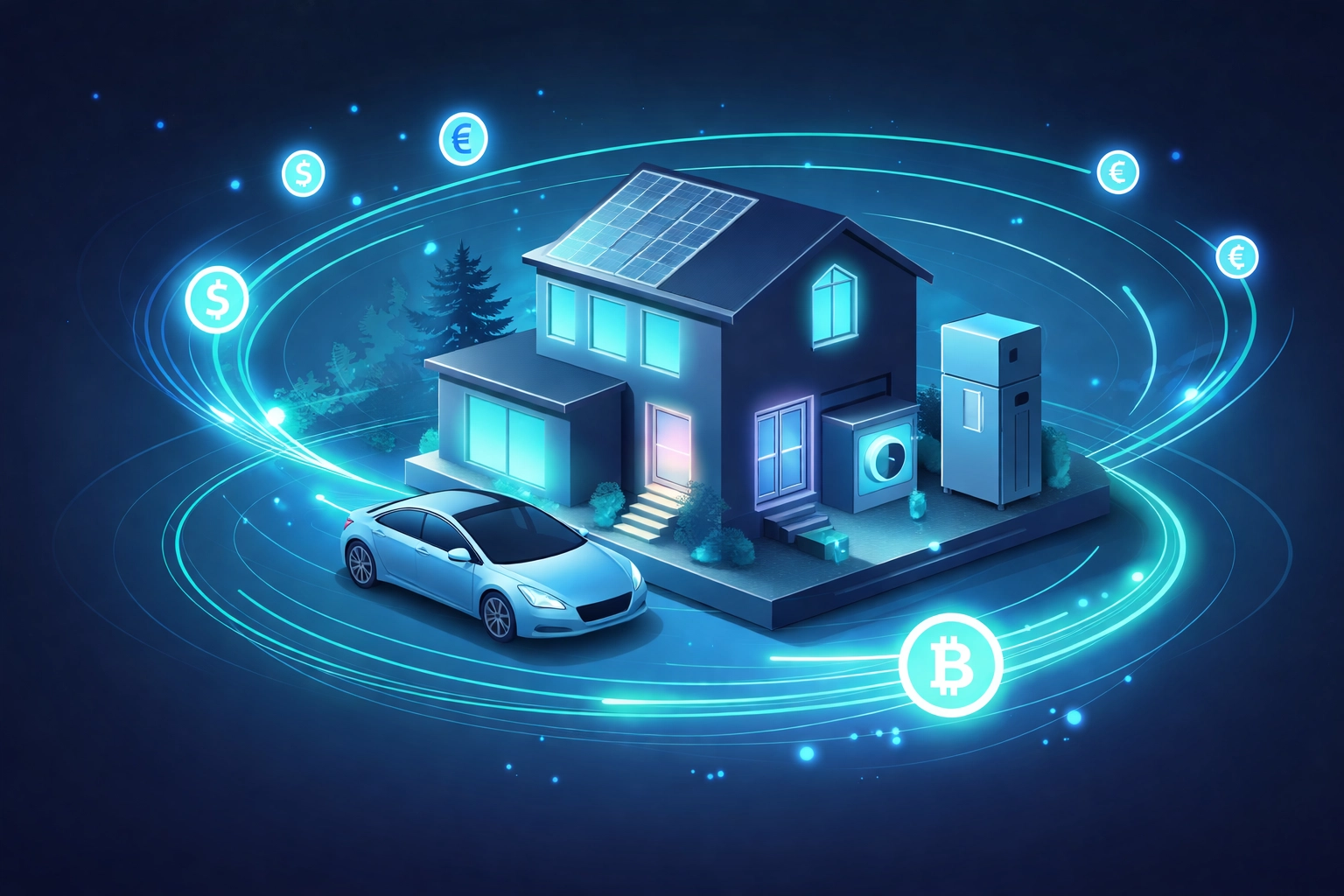
Picture this: recurring subscriptions that adjust automatically based on your spending patterns. Cross-border payments that settle instantly with real-time regulatory reconciliation. Smart wallets that select the optimal funding source for each transaction without any user input.
Your car pays tolls and charging fees autonomously. Your home manages energy payments based on real-time pricing. Your fridge orders groceries when supplies run low: and handles the payment seamlessly.
The payment will no longer be an action but a pulse within an autonomous financial ecosystem.
As AI matures, payments will increasingly resemble utilities like electricity or the internet: services consumers notice only when they fail. For fintech leaders, this represents both an enormous opportunity and an existential challenge: how do you differentiate when your core service becomes invisible?
The Strategic Imperative
The shift to invisible payments isn't a matter of if, but when. The technology is here, consumer expectations are shifting, and the early movers are already capturing market share.
For fintech founders and executives, the questions to ask yourself are clear:
How can we remove friction from our payment flows?
What data do we need to enable smarter, more autonomous transactions?
Are our security systems proactive enough for real-time, invisible commerce?
Where can we embed payment capabilities into adjacent experiences?
The checkout button had a good run. But in the era of invisible payments, the best transaction is the one your customers never even notice.
Ready to future-proof your fintech payment strategy? At Kian Jackson, we help fintech founders and executives navigate the rapidly evolving payments landscape. Whether you're looking to implement invisible payment experiences or need strategic guidance on embedded finance, we're here to help.
Get in touch with our team to discuss how AI-powered payments can transform your business. Let's build the future of frictionless commerce together.
Comments