
Agentic AI Meets Payments: How Smart POS Systems Are Automating Revenue (Not Just Checkout)

Updated: Mar 4
Your POS system was supposed to make life easier. Instead, it's a glorified calculator that records what's already happened. You ring up a sale. It logs the transaction. End of story.
But what if your POS didn't just record revenue, what if it actively generated it?
That's exactly what's happening right now with agentic AI. And if you're running a café, restaurant, bar, or hotel in 2026, this shift isn't just interesting, it's existential.
What the Hell Is Agentic AI, Anyway?
Let's start with the basics. Traditional AI, the stuff powering chatbots or recommendation engines, responds to inputs. You ask a question, it answers. You search for a product, it suggests similar items. It's reactive.
Agentic AI is different. It doesn't wait for instructions. It observes, learns, decides, and acts autonomously to achieve specific outcomes. According to Gartner's 2025 research, agentic AI represents the "next evolution of AI maturity," moving from automation to autonomous, outcome-driven operations.
In the context of POS systems, this means your payment terminal isn't just processing transactions anymore, it's actively making decisions to maximise revenue, optimise operations, and personalise customer experiences in real time.
Think of it as upgrading from a passive cash register to an always-on business strategist that never sleeps.
The Old Way: Passive Payment Processing
Let's be honest. Most POS systems today are glorified ledgers. They:
Record what a customer ordered
Calculate the total
Process the payment
Generate a receipt
That's it. The heavy lifting, deciding what to recommend, when to offer a discount, how to price items based on demand, falls entirely on your staff or, more likely, gut feel and static menu boards.
If a table orders a bottle of wine, the POS doesn't suggest a cheese platter. If it's 2 PM on a rainy Tuesday and you've got 15 muffins about to go stale, the system doesn't automatically trigger a "buy one, get one half price" offer. If foot traffic drops because of a local event, your pricing stays rigid.
You're leaving money on the table. Not because your team isn't trying, but because humans can't process data at scale in real time.
The New Way: Agentic AI as Your Revenue Engine
Now imagine this: A guest walks into your café at 3 PM. Your agentic POS system knows:
It's mid-afternoon (slower period)
The weather forecast shows rain in 30 minutes
You have excess stock of pastries that expire today
This customer has visited twice before and ordered oat milk lattes both times
Similar customers respond well to bundled offers
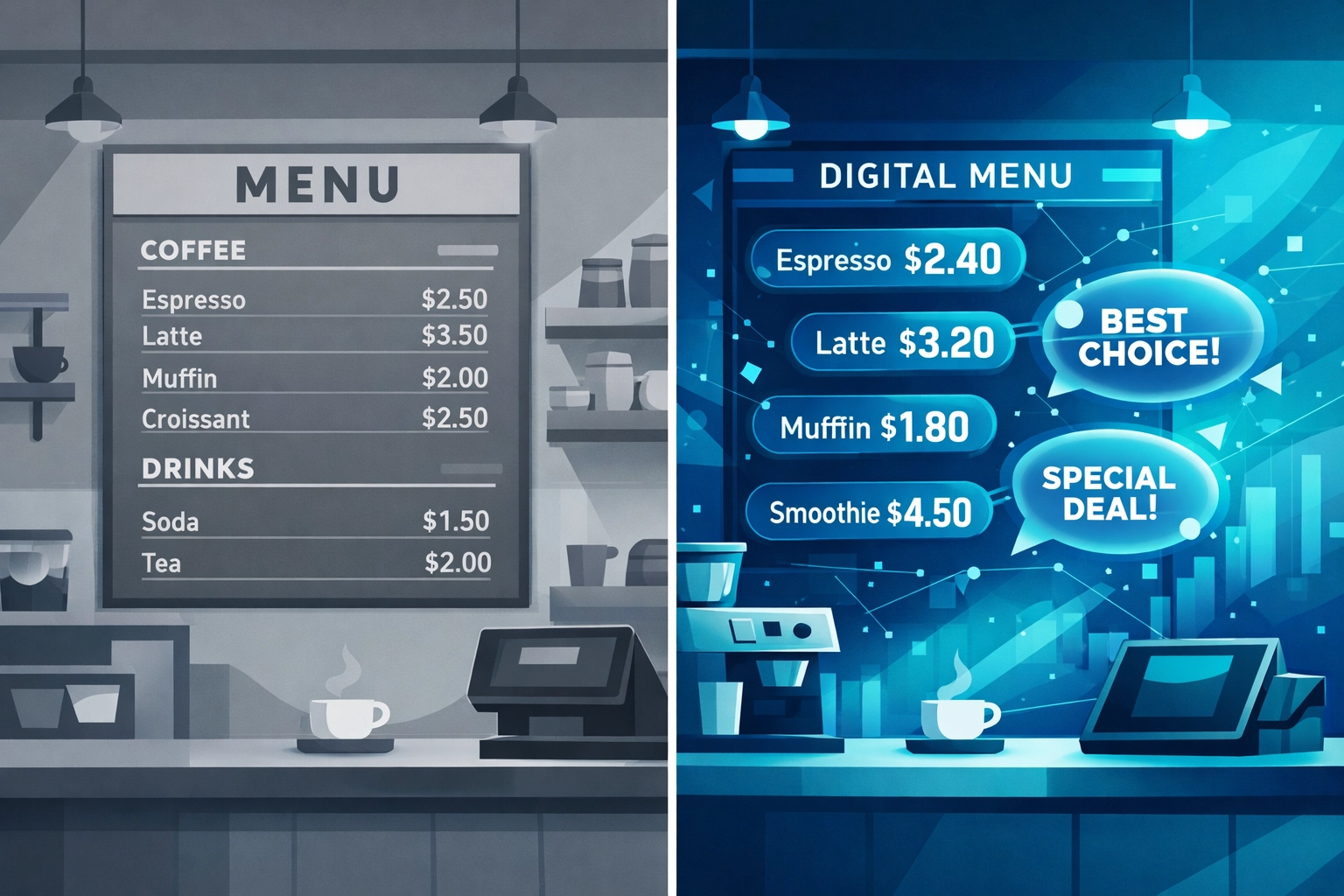
Before the guest even reaches the counter, the system has already adjusted digital menu boards to highlight a "Rainy Day Bundle: Any Pastry + Large Coffee for $12." When the staff member takes the order, the POS prompts an upsell: "Would you like to add an oat milk latte upgrade for $1 extra?"
The guest says yes. The system captures the sale, updates inventory in real time, and logs the preference data to refine future offers.
That's not checkout. That's active revenue generation.
How Agentic AI Automates Revenue Across Hospitality
Let's break down the core capabilities that separate agentic POS systems from traditional terminals:
1. Dynamic Pricing Based on Real-Time Demand
Static pricing is dead. Agentic systems can adjust menu prices automatically based on:
Time of day: Premium pricing during peak lunch hours, discounts during slow periods
Inventory levels: Lower prices on items approaching expiration
External signals: Weather, local events, competitor pricing
Customer segments: Personalised offers for loyalty members vs. first-time visitors
This isn't surge pricing like Uber: it's intelligent margin optimisation that feels natural to customers because it's contextually relevant.
2. Automated Upselling and Cross-Selling
Your staff can't remember every pairing opportunity or promotions in real time, especially during rushes. Agentic AI can. It analyses:
What items are frequently purchased together
Which upsells have the highest acceptance rates
What promotions drive the most incremental revenue
Individual customer preferences based on past behaviour
The system then surfaces contextual recommendations at the exact moment of order: not after the transaction is complete.
3. Inventory Management Tied to Real-Time Demand
Traditional POS systems track inventory after a sale. Agentic systems use predictive models to:
Forecast demand based on historical patterns, weather, and events
Automatically reorder stock before you run out
Redistribute inventory across multiple locations to prevent waste
Trigger promotions to clear excess stock before spoilage
This isn't just about efficiency: it's about capturing sales you'd otherwise lose to stockouts or waste.

4. Personalised Guest Experiences at Scale
Personalisation used to require CRM systems, loyalty programs, and manual segmentation. Now, agentic POS systems can:
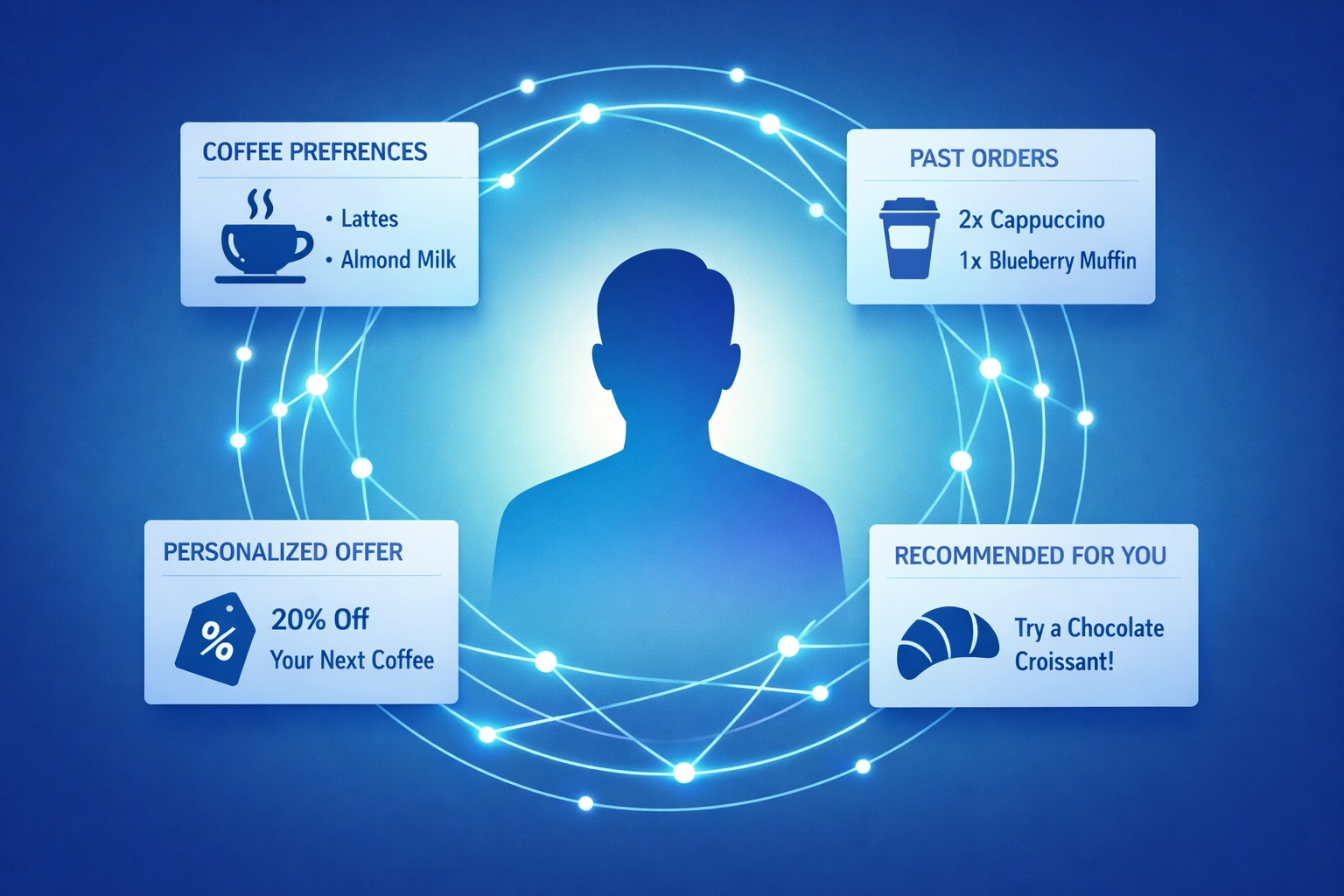
Recognise returning customers via payment cards or mobile wallets
Remember preferences (dietary restrictions, favourite orders, spending patterns)
Adjust recommendations in real time based on context
Send post-visit offers tailored to individual behaviour
This creates a VIP experience without the manual overhead.
The Payment Integration Layer: Where the Magic Happens
Here's where fintech nerds get excited. The real breakthrough isn't just the AI: it's how agentic systems integrate directly with payment rails to execute transactions autonomously.
OpenAI recently launched an Agentic Commerce Protocol, co-developed with Stripe, that allows users to complete purchases within ChatGPT without leaving the conversation. Similarly, Shopify is building infrastructure that lets AI agents execute transactions across its merchant network.
In hospitality, this means:
Frictionless transactions: Guests can order, customise, and pay via voice or chat interfaces without touching a terminal
Autonomous negotiations: AI agents can offer dynamic discounts, bundle deals, or loyalty rewards in real time based on customer signals
Instant fulfilment: Orders are automatically routed to kitchen displays or fulfilment systems without manual input
This isn't sci-fi. Venues are deploying this right now.
Store Operations: The Hidden Revenue Driver
Microsoft's store operations agent template demonstrates another critical layer: operational decision-making that directly impacts revenue.
By analysing internal signals (sales trends, foot traffic, staff schedules) alongside external factors (weather, local events, social media buzz), agentic POS systems can:
Recommend staffing adjustments to avoid under- or overstaffing
Prioritise KPIs based on real-time business conditions
Surface actionable insights to managers without requiring data analysis skills
Automate routine decisions so teams focus on high-value tasks
For a busy pub during a Saturday night rush, this could mean the difference between turning tables efficiently and losing customers to wait times. For a café with unpredictable foot traffic, it could mean the difference between wasted labour costs and optimised margins.
What This Means for Hospitality Operators
If you're running a venue in 2026, here's the reality: Your POS system is either helping you scale, or it's holding you back.
Agentic AI isn't just a tech upgrade: it's a fundamental shift from passive tools to proactive business partners. The operators who win in the next five years won't be the ones with the fanciest fit-outs or the trendiest menus. They'll be the ones who've built always-on, self-learning revenue engines into their operations.
And here's the thing: this technology isn't exclusive to enterprise chains. The cost of deploying agentic AI in POS systems is dropping fast. The barriers are knowledge and strategy, not budget.
Ready to Build a Smarter Payment Stack?
If you're serious about turning your POS from a transaction tool into a revenue engine, you need to understand how agentic AI integrates with modern payment rails, inventory systems, and customer data platforms.
At Kian Jackson, we help hospitality operators and fintech providers design payment ecosystems that actually drive growth: not just process transactions. Whether you're evaluating POS vendors, integrating AI capabilities, or building custom solutions, we can help you cut through the noise and build something that works.
Get in touch and let's talk about what agentic AI could do for your business.
Comments