
The Social POS: Why Your Next Sale Might Start on TikTok and End at the Counter

Updated: Mar 4
Here's something wild: a 22-year-old sees a cafe's matcha latte on TikTok at 9am, taps "save," then rocks up at 11am to order it in person: expecting it to be in stock, priced exactly as advertised, and paid for with the same frictionless experience they'd get online.
If your POS system can't handle that journey, you're already behind.
Welcome to the era of social POS: where the line between discovery, desire, and transaction has blurred so completely that your point-of-sale needs to speak fluent TikTok, Instagram, and every other platform your customers are scrolling through.
The Customer Journey Doesn't Start at Your Door Anymore
Let's be honest: traditional retail assumed customers would walk in cold, browse, and buy. That model's been on life support for years, but social commerce has officially pulled the plug.
Today's customer journey looks more like this:
Discovery happens on TikTok or Instagram (via influencer content, paid ads, or user-generated videos)
Research continues across multiple platforms: they're checking reviews, comparing prices, watching unboxing videos
Decision is made before they ever set foot in your store (or tap "buy now" online)
Transaction happens wherever is most convenient: sometimes online, sometimes in-store, often a mix of both
The problem? Most POS systems were built for a world where the journey starts at step three. They're glorified cash registers with inventory management bolted on, not orchestration platforms for omnichannel commerce.
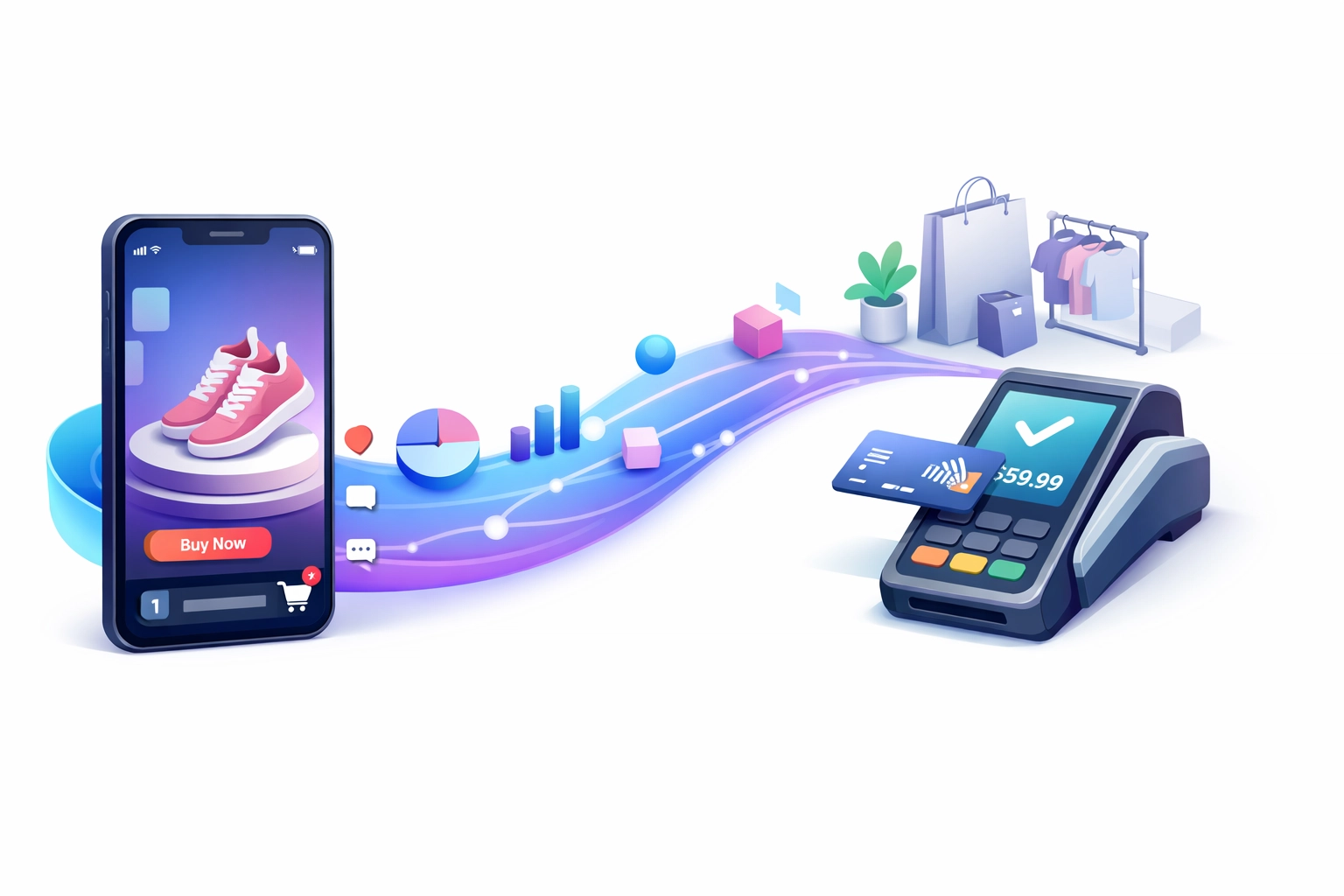
What Social POS Actually Means (And Why It's Not Just Marketing Speak)
Social POS isn't about posting pretty pictures of your products on Instagram: though that doesn't hurt. It's about creating a technical infrastructure where social platforms and physical store systems communicate in real-time, sharing inventory data, customer information, and transaction details seamlessly.
Here's what that looks like in practice:
Unified inventory across channels: When someone buys your limited-edition sneakers on TikTok Shop at 2pm, your in-store POS knows instantly. The staff member showing those same sneakers to a customer at 2:05pm gets a real-time update: "Only 2 left in stock."
Social-to-store attribution: A customer clicks your Instagram ad, saves the product, then visits your physical location three days later. Your POS system should recognise that journey, attributing the sale correctly and informing future marketing spend.
Payment data that follows the customer: Whether they pay via TikTok's checkout, Apple Pay in-store, or Afterpay online, all transaction data flows into one unified system: giving you actual insight into customer behaviour, not fragmented guesses.
The Technical Architecture Behind Social-to-Store Commerce
Let's get into the weeds for a moment, because this is where the magic (and the complexity) lives.
Modern social POS integration typically requires three core components:
1. Real-Time Inventory Synchronisation
Your inventory management system needs to push updates to social platforms instantly: not hourly, not daily, but within seconds. This means:
API connections between your POS and platforms like TikTok Shop, Instagram Shopping, and Facebook Marketplace
Webhook triggers that fire when inventory changes occur (whether from an online sale, in-store purchase, or manual adjustment)
Multi-location inventory visibility if you operate multiple stores or warehouses
Platforms like Lightspeed, Square, and Shopify POS have started building these integrations natively, but many legacy systems require middleware solutions to bridge the gap.
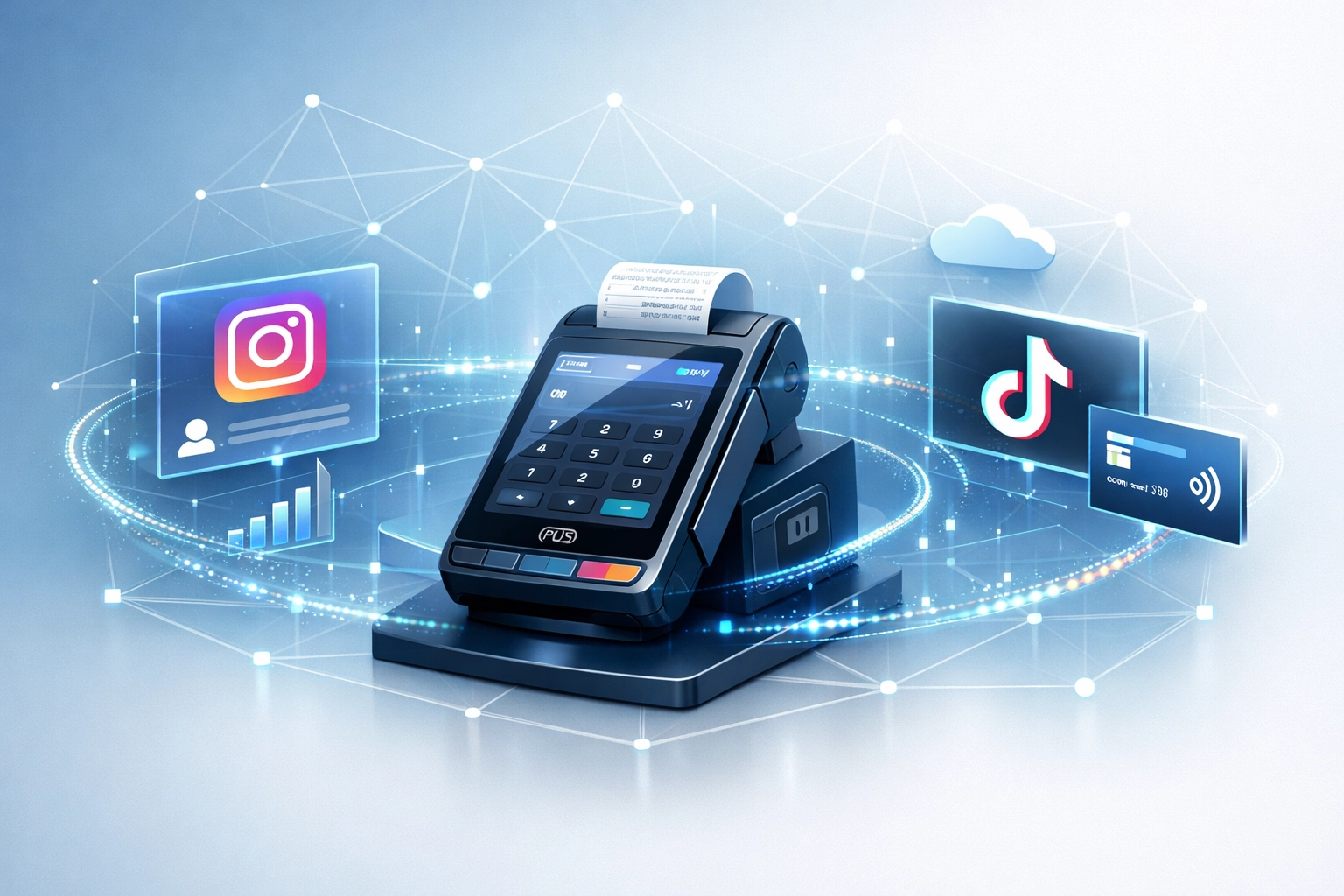
2. Order Management That Speaks Multiple Languages
When an order comes through TikTok, your POS needs to understand it's not just "an online order": it's a social commerce transaction with specific fulfilment expectations, return policies, and customer data structures.
This is where enterprise resource planning (ERP) integration becomes critical. Solutions like Fulfil.io and NetSuite handle automatic order import from social platforms, routing them through your existing fulfilment workflows while maintaining real-time status updates back to the originating platform.
The customer who bought on TikTok gets shipment notifications through TikTok. The customer who bought in-store gets SMS updates from your store system. Different channels, unified data.
3. Payment Orchestration Across Touchpoints
Here's where fintech founders should perk up: social POS creates a fascinating payments challenge. You're not just processing transactions: you're stitching together customer payment preferences across platforms, devices, and contexts.
Your payment infrastructure needs to:
Accept TikTok Shop payments (which run through their proprietary gateway)
Process in-store contactless payments via NFC terminals
Handle BNPL options like Afterpay or Zip consistently across channels
Unify refunds and chargebacks regardless of originating channel
Maintain PCI compliance while sharing customer data between systems
The really sophisticated operators are using payment orchestration layers: think Stripe Connect or Adyen's platform solutions: to create a single source of truth for transaction data while maintaining flexibility in payment methods.
Why Hospitality and Retail Are All-In on Social Commerce
The numbers tell the story. TikTok Shop processed over $20 billion in gross merchandise value in 2023, with Australia and New Zealand showing some of the highest engagement rates globally. Instagram Shopping continues to grow, with 70% of users saying they discover new products on the platform weekly.
But it's not just about volume: it's about customer expectations.
Gen Z and younger millennials don't differentiate between "online" and "offline" shopping. They expect:
Products they see online to be available in-store (and vice versa)
Pricing consistency across all channels
The ability to start a transaction on one platform and complete it on another
Reviews, recommendations, and social proof at every stage of the journey
Retailers and hospitality venues that can't deliver on these expectations aren't just losing sales: they're losing relevance.
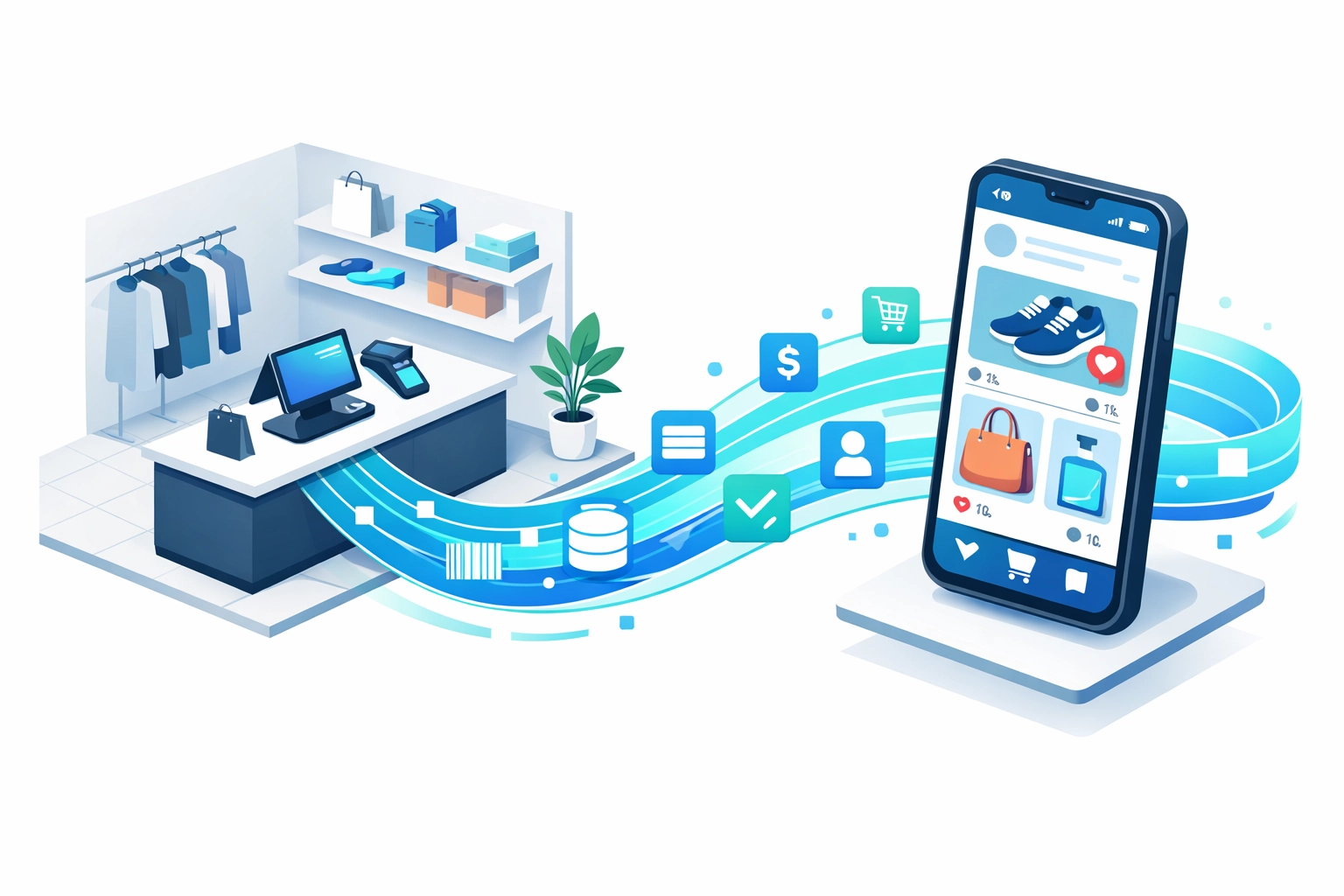
The Challenges (Because Nothing's Ever Simple)
Let's be real: integrating social commerce with existing POS infrastructure is a proper headache. Here are the biggest pain points we're seeing:
Legacy system limitations: Many established retailers are running POS systems from 2010 (or earlier) that simply weren't designed for API-first architecture. Retrofitting social commerce onto these platforms is like trying to stream Netflix on a VCR.
Data fragmentation: Customer data lives in social platforms, transaction data lives in your POS, inventory data lives in your ERP, and marketing data lives in your CRM. Creating a single customer view requires sophisticated data pipelines and: let's be honest: a decent-sized budget.
Platform policy changes: TikTok, Instagram, and other social platforms change their commerce policies regularly. What works today might require complete reconfiguration next quarter, and your POS integration needs to be flexible enough to adapt.
Return and refund complexity: When a customer buys on TikTok but wants to return in-store, who handles the refund? Which system processes it? How do you maintain accurate accounting across platforms? These operational questions need answers before you launch.
Where Smart Operators Are Heading Next
The cutting edge of social POS isn't just about integration: it's about intelligence. Here's what forward-thinking retailers and hospitality venues are building:
Predictive inventory based on social signals: Using AI to analyse trending products on TikTok and Instagram, then automatically adjusting in-store inventory before demand spikes. If a particular menu item goes viral locally, your POS should flag it to increase par levels.
Dynamic pricing across channels: Real-time price optimisation that considers social media engagement, in-store traffic, and inventory levels. Not surge pricing (which customers hate), but intelligent demand-based adjustments that maximise revenue without alienating customers.
Social attribution in loyalty programs: Rewarding customers not just for purchases, but for social engagement: sharing products, leaving reviews, creating UGC. Your POS becomes the hub for a loyalty program that spans digital and physical touchpoints.
Automated fulfilment routing: When an order comes through social channels, AI determines the optimal fulfilment method: ship from warehouse, ship from nearest store, or alert customer for in-store pickup: based on inventory location, delivery speed expectations, and cost.
The Fintech Opportunity Hiding in Plain Sight
For fintech founders reading this: the social POS space is ripe for disruption. Most existing solutions are either:
Clunky enterprise systems that take months to implement and cost a fortune
Basic integrations that handle inventory sync but miss the payments and data orchestration piece
Platform-specific solutions that lock merchants into proprietary ecosystems
There's a massive opportunity for a payments-first social commerce platform that prioritises:
Fast implementation (weeks, not months)
Transparent pricing that scales with GMV
True omnichannel payment orchestration
Built-in compliance and fraud detection across social and in-store channels
The merchant acquiring space has largely ignored social commerce, treating it as "just another sales channel" rather than a fundamental shift in how commerce operates. That's a mistake: and a gap waiting to be filled.
Making It Real: Your Next Steps
Whether you're running a boutique retail operation or scaling a hospitality empire, here's how to start thinking about social POS:
Audit your current tech stack: Can your POS system handle real-time inventory updates? Does it support API integrations with major social platforms? If not, what's the upgrade path?
Map your customer journey: Where are customers actually discovering your products? Which social platforms drive the most engagement? What percentage of social traffic converts in-store versus online?
Start small, think big: You don't need to integrate every social platform on day one. Pick the channel with the highest engagement, build a solid integration, then expand.
Invest in unified data infrastructure: Before you worry about fancy AI features, get the basics right: one source of truth for inventory, customer data, and transactions.
The reality is this: social commerce isn't coming. It's already here, reshaping how customers discover, evaluate, and purchase products. Your POS system either evolves to meet that reality, or it becomes a very expensive paperweight.
Ready to future-proof your payments infrastructure? At Kian Jackson, we help fintech founders and retail innovators navigate the complex world of omnichannel commerce. Whether you're integrating social platforms with existing systems or building something entirely new, let's talk about turning your POS into a true revenue engine. Get in touch to explore how social commerce integration can transform your business.
Comments