
Social Loyalty: Why Your POS Needs to Reward Your Most Active Online Fans

Updated: Mar 4
Here's the uncomfortable truth: your Instagram followers aren't paying your bills. Your brand advocates are.
You've got 50,000 followers, engagement rates that make the marketing team smile, and a content calendar that'd make a military operation look disorganised. But when you look at your actual sales data, there's a frustrating disconnect. Those likes and shares aren't translating into foot traffic or transactions. Not in any measurable way, anyway.
Enter Social Loyalty, the fintech innovation that's finally bridging the gap between your customer's double-tap and their actual purchase at the counter.
What the Hell is Social Loyalty, Anyway?
Social Loyalty isn't just another buzzword for your quarterly innovation deck. It's a fundamental rethinking of how loyalty programmes work in a world where your customers spend more time scrolling than shopping.
The concept is beautifully simple: when a customer engages with your brand on social platforms, liking your post, sharing your latest product drop, tagging you in their story, they earn immediate, trackable rewards that can be redeemed in-store at your POS. Think of it as loyalty points 2.0, except instead of rewarding only purchases, you're rewarding the behaviours that actually drive those purchases.
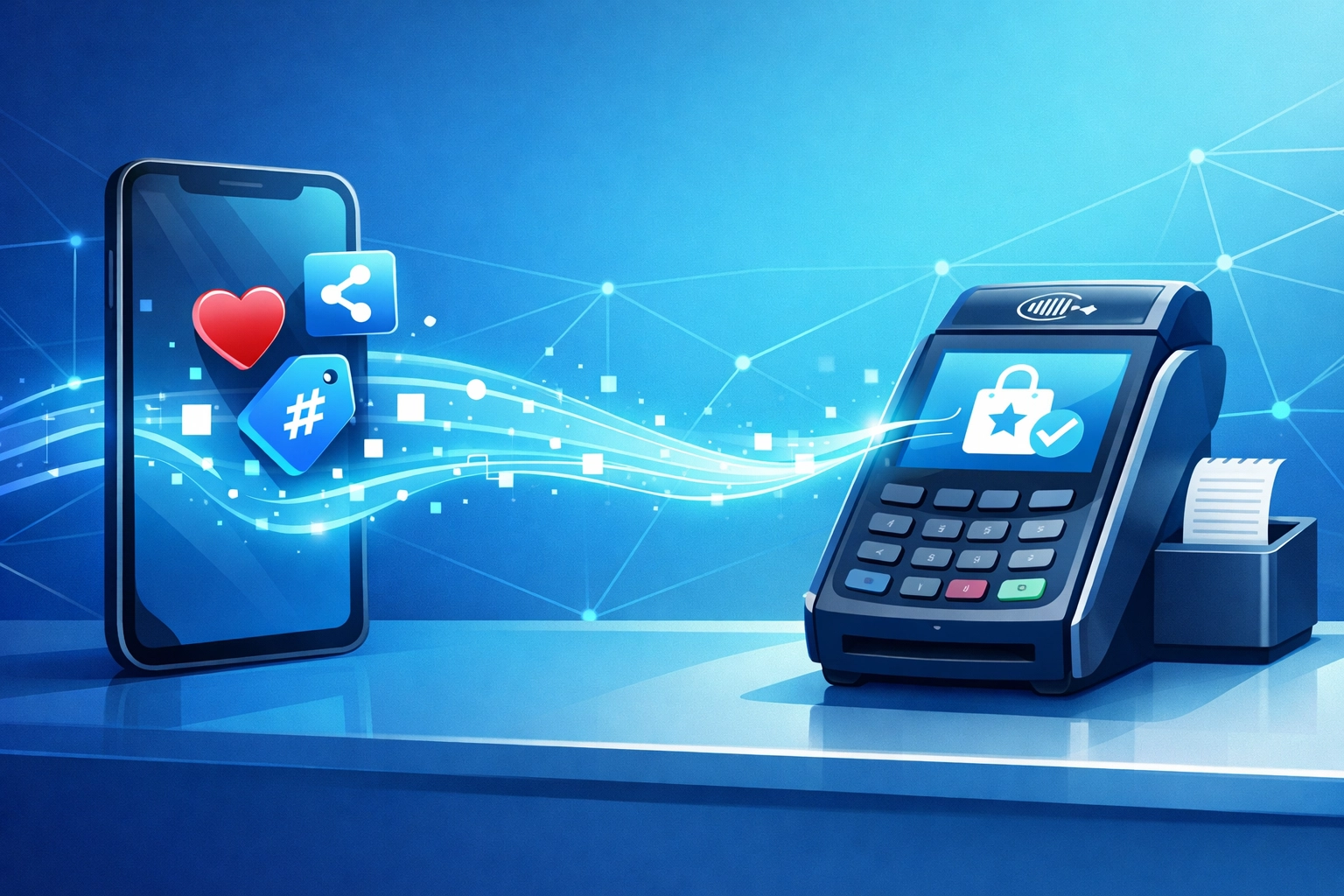
The technical magic happens at the intersection of social media APIs, payment infrastructure, and modern POS systems. When Sarah tags your coffee shop in her Instagram story about her flat white, your system recognises her, validates the engagement, and instantly credits her account with points. When she walks into your shop the next morning, those points are already waiting at the checkout, no app to open, no code to remember, just seamless recognition and reward.
The Death of the Passive Follower
Let's be honest: most loyalty programmes are rubbish. They reward transactions in isolation, completely ignoring the fact that your most valuable customers aren't just buying, they're broadcasting.
Traditional loyalty thinking goes like this: Customer buys coffee → Customer earns points → Customer eventually redeems points → Repeat.
But that model completely misses the modern customer journey. Your best customers are doing so much more than buying. They're creating content, influencing their networks, and essentially doing your marketing for you. And you're giving them... nothing? Or worse, the same generic points you're giving the bloke who walks in once a quarter and never tells a soul about you?
Social Loyalty flips this on its head. It recognises that the person who shares your product to their 5,000 followers is worth exponentially more than someone who quietly makes a purchase and disappears. It's about transforming passive followers into active brand advocates, and compensating them accordingly.

The shift is psychological as much as it is technological. When customers know that their social engagement translates into real-world value, they engage differently. They're not just passively consuming your content; they're actively looking for opportunities to interact, share, and advocate.
The Fintech Infrastructure Making This Possible
Here's where it gets interesting for the fintech crowd. Social Loyalty isn't possible without sophisticated backend infrastructure that most legacy POS systems simply can't handle.
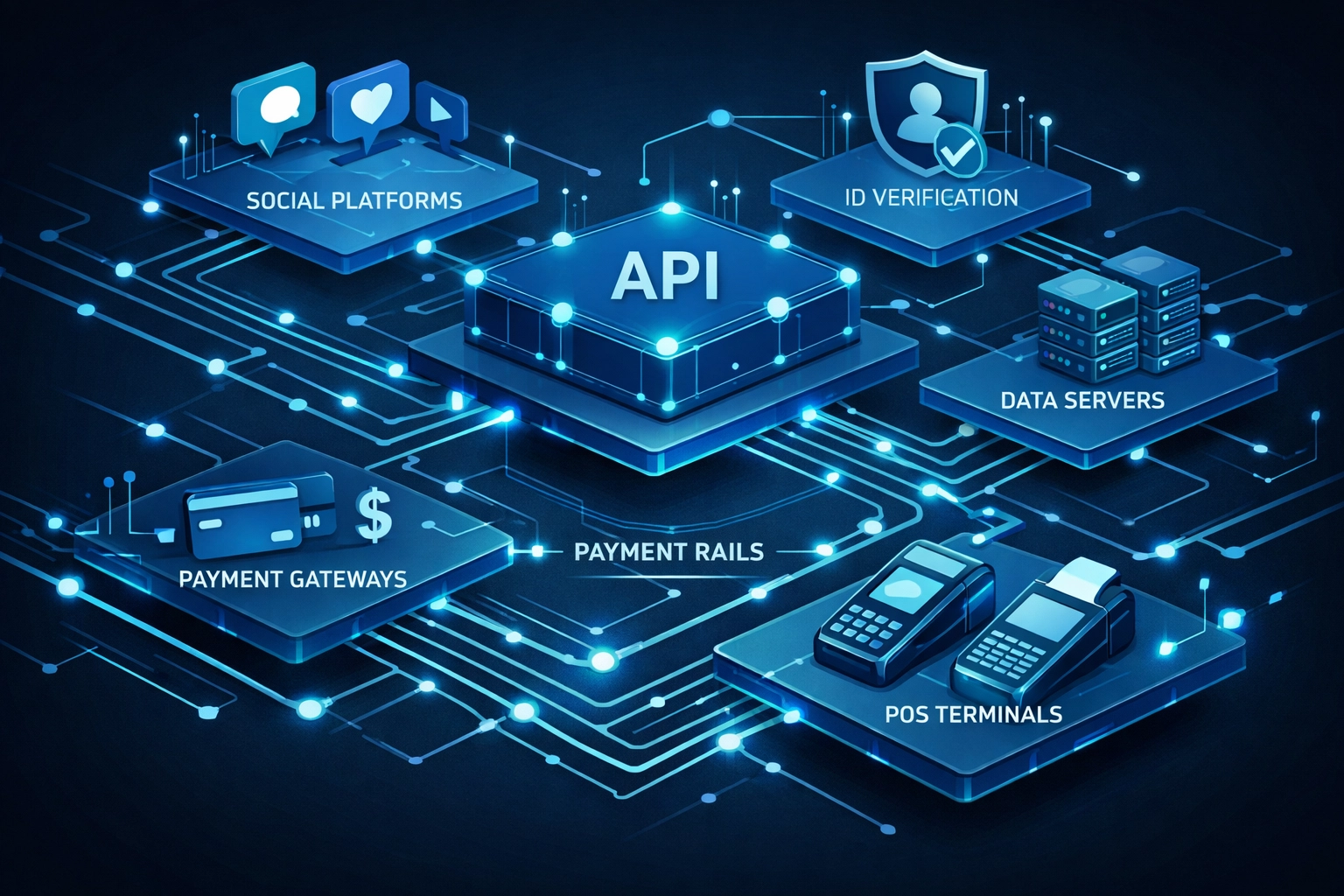
You need real-time API integrations with social platforms that can validate engagement authenticity (because yes, bot farms are already trying to game this). You need customer identification systems that can match a social media profile to a loyalty account without creating friction. You need payment rails that can handle micro-rewards and instant crediting. And you need all of this to work seamlessly at the point of sale, whether that's a physical terminal, a mobile checkout, or an online cart.
The technical stack typically includes:
Identity resolution layers that link social handles to customer profiles across channels. This is harder than it sounds, someone might be @coffeelover on Instagram, sarah.jones@email.com in your CRM, and paying with a card in a completely different name.
Engagement verification APIs that confirm the like, share, or tag is genuine and meets your programme criteria. Did they actually tag you, or just mention you in a comment? Is their account real, or a bot network? These details matter when you're distributing real value.
Real-time rewards engines that instantly calculate and credit points based on predefined rules. Speed matters here, delay the gratification, and you've lost the psychological impact.
Omnichannel payment integration that ensures those social-earned points work identically whether the customer is shopping online, in-store, or via mobile. This is where traditional POS systems often fall over.
Closing the Loop: The Data Goldmine
For fintech platforms and payment processors, Social Loyalty solves one of commerce's oldest problems: attribution.
Marketing teams have forever struggled to prove ROI on social media spend. Sure, you can track impressions and engagement, but connecting those metrics to actual revenue? That's been mostly guesswork and attribution modeling that'd make a statistician weep.
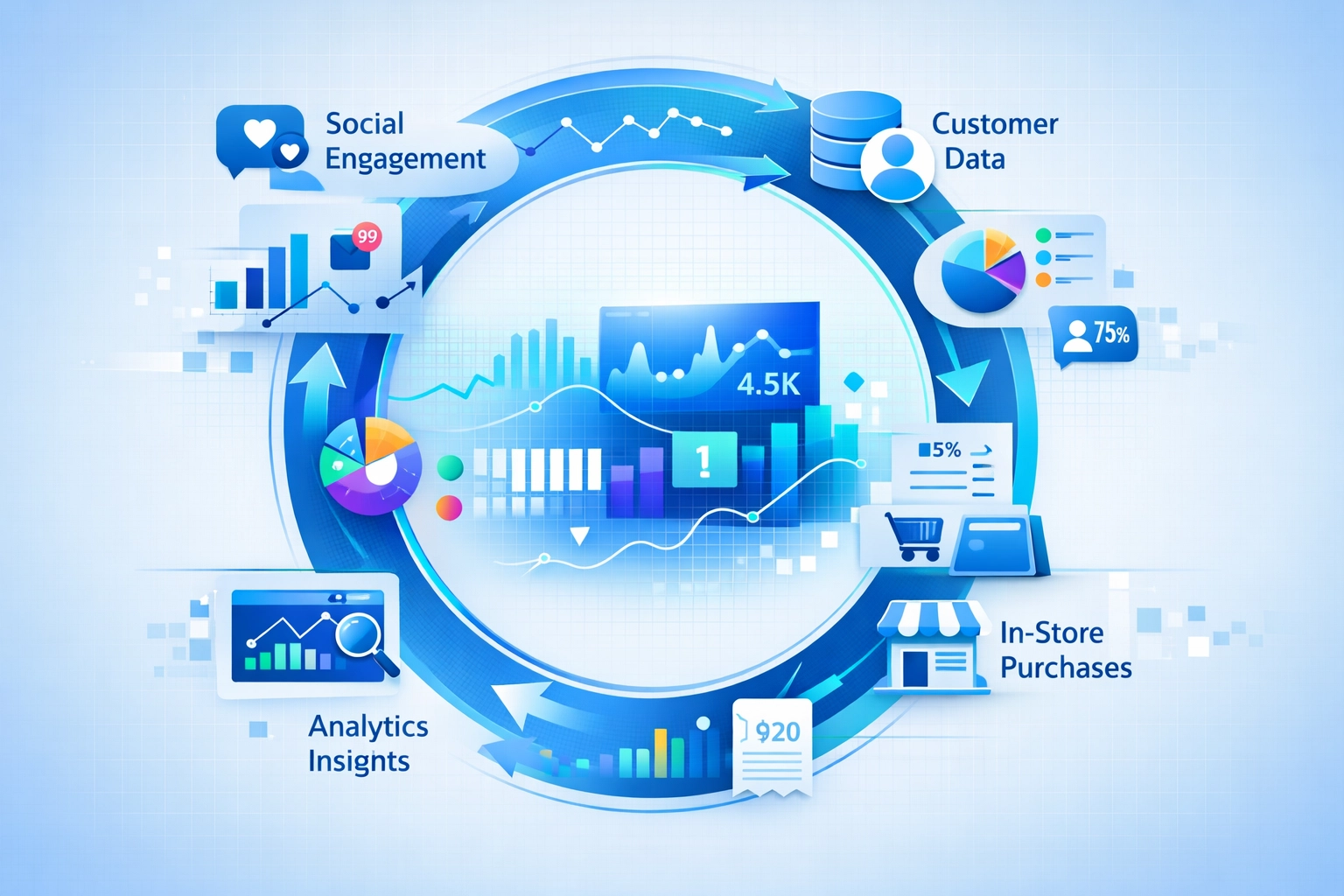
Social Loyalty creates a direct, measurable line from digital engagement to physical sale. You can finally answer questions like:
Which types of social content drive the most valuable customer actions?
What's the actual revenue impact of a customer sharing versus just liking?
How does social engagement correlate with lifetime value and purchase frequency?
Which influencers or brand advocates are genuinely moving the needle?
This data is absolute gold for retailers, but it's equally valuable for fintech companies building the infrastructure. Payment processors can offer merchants unprecedented insights into their customer acquisition costs. Loyalty platform providers can demonstrate concrete ROI. And everyone in the value chain can optimise based on actual behaviour rather than assumptions.
The closed-loop nature of Social Loyalty also enables predictive capabilities that weren't possible before. When you can see that customers who share products on social are 3.5x more likely to make a purchase within 48 hours, you can time your promotional offers accordingly. When you know that tagged Instagram stories convert better than shared posts, you can incentivise accordingly.
What This Means for Your Business
If you're running a fintech platform, a payment gateway, or POS infrastructure, Social Loyalty represents both an opportunity and a competitive necessity.
The opportunity is clear: merchants are desperate for better ways to drive foot traffic and prove social media ROI. A POS system that natively supports social engagement rewards isn't just a nice-to-have: it's a significant competitive differentiator.
But here's the competitive necessity part: your merchants' customers are already expecting this kind of integration. They're used to seamless experiences across channels. They expect brands to recognise and reward their advocacy. If your platform can't deliver this, someone else's will.
Implementation doesn't have to be overwhelming. Start with pilot programmes that focus on high-value actions: tagged posts and authentic shares rather than simple likes. Build the technical infrastructure in stages, beginning with identity resolution and basic API integrations. Partner with established social loyalty platforms if building in-house isn't viable.
The key is creating genuine value on both sides. Customers need to feel that their social engagement is meaningfully recognised. Merchants need to see actual impact on traffic and sales. Get those two things right, and the technical details become solvable problems rather than insurmountable obstacles.
The 2026 Reality Check
We're in February 2026, and the early movers in Social Loyalty are already seeing results that make traditional loyalty programmes look prehistoric. Cafes reporting 40% increases in social mentions. Retail stores seeing their top social advocates spend 2.5x more than regular customers. Payment platforms differentiating on social integration rather than just transaction fees.
But we're still early. Most POS systems treat social media as a marketing afterthought rather than a core component of the customer experience. Most loyalty programmes are still rewarding transactions in isolation. And most fintech platforms are missing the bigger picture of what "loyalty" means in an era where influence is currency.
The infrastructure is here. The customer expectation is here. The business case is proven. What's missing is execution.
Ready to Build Social Loyalty Into Your Platform?
The intersection of social engagement and payment infrastructure isn't just the future of retail: it's the present. The question isn't whether to integrate social loyalty into your POS ecosystem, but how quickly you can move.
At Kian Jackson, we help fintech platforms and payment providers navigate exactly these kinds of technical and strategic challenges. Whether you're building social loyalty capabilities from scratch or integrating with existing platforms, we can help you avoid the expensive mistakes and accelerate your time to market.
Want to talk through your specific use case? Reach out directly: we're always up for a conversation about where fintech infrastructure is heading next.
Because in 2026, your customers aren't just buying products. They're broadcasting their choices to the world. And your POS system better be ready to reward them for it.
Comments