
From Rewards Points to Stablecoins: What JPMorgan and Coinbase’s Partnership Means for the Future of Payments

Updated: Aug 14, 2025
If you’ve been following the latest fintech headlines, you’ve probably heard about the groundbreaking partnership between JPMorgan Chase and Coinbase. It’s a huge deal—not just because two financial heavyweights are working together, but because it marks a seismic shift in how traditional financial services are embracing crypto. Let’s break down what’s really happening here, why it matters, and what it could mean for the future of payments.
The Power Duo: JPMorgan Meets Coinbase
So what’s actually in this partnership? Announced in July 2025, the JPMorgan x Coinbase alliance goes way beyond your average “let’s try out crypto” project. Here’s what stands out:
Direct Bank-to-Wallet Integration: Chase customers will be able to connect their accounts straight to Coinbase, without using third-party platforms like Plaid. This means smoother, bank-controlled access for funding and managing crypto.
Credit Card Funding: Starting in the fall of 2025, you’ll be able to fund your Coinbase account using your Chase credit card—making it faster to buy and sell crypto assets, or just to move funds.
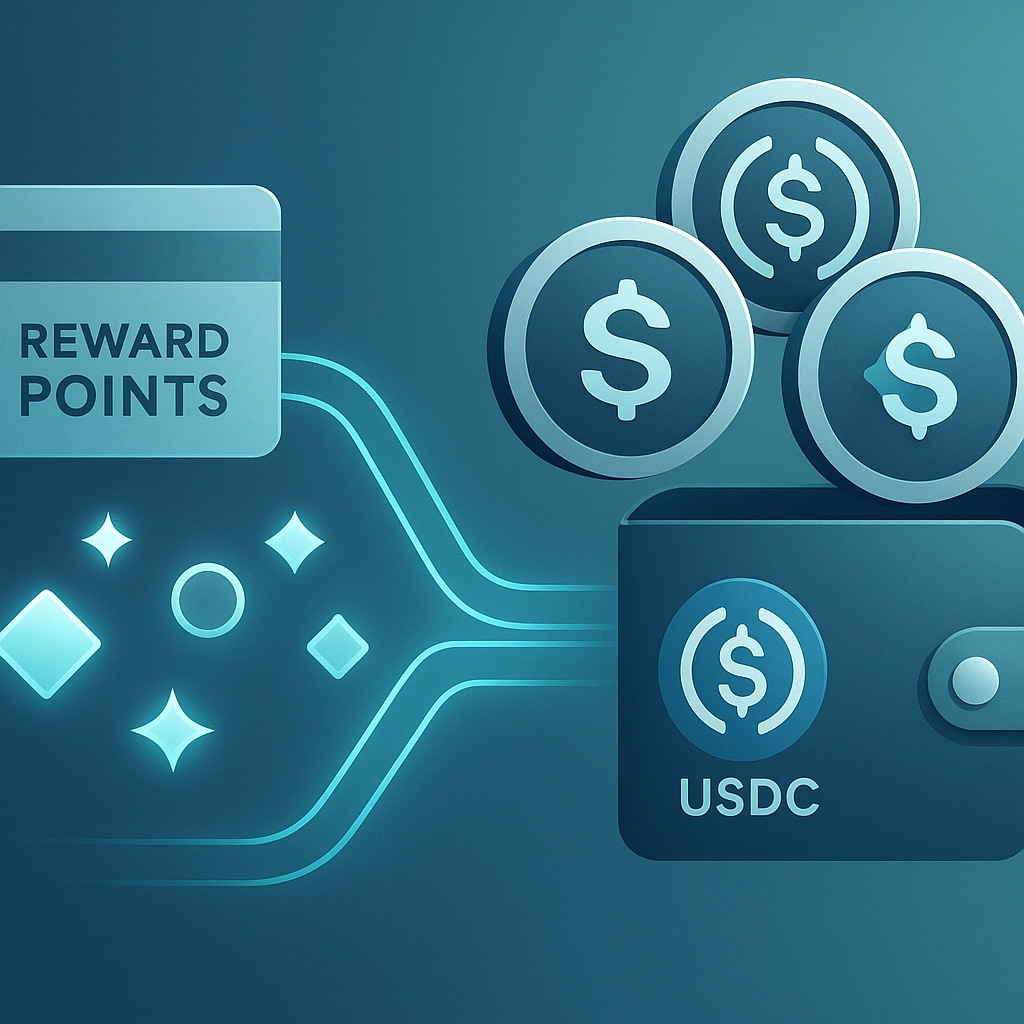
Chase Points to USDC: Perhaps the biggest headline: Chase Ultimate Rewards points can now be converted 1:1 into USDC (USD Coin). So, 100 points = $1 USDC, deposited directly into your Coinbase wallet.
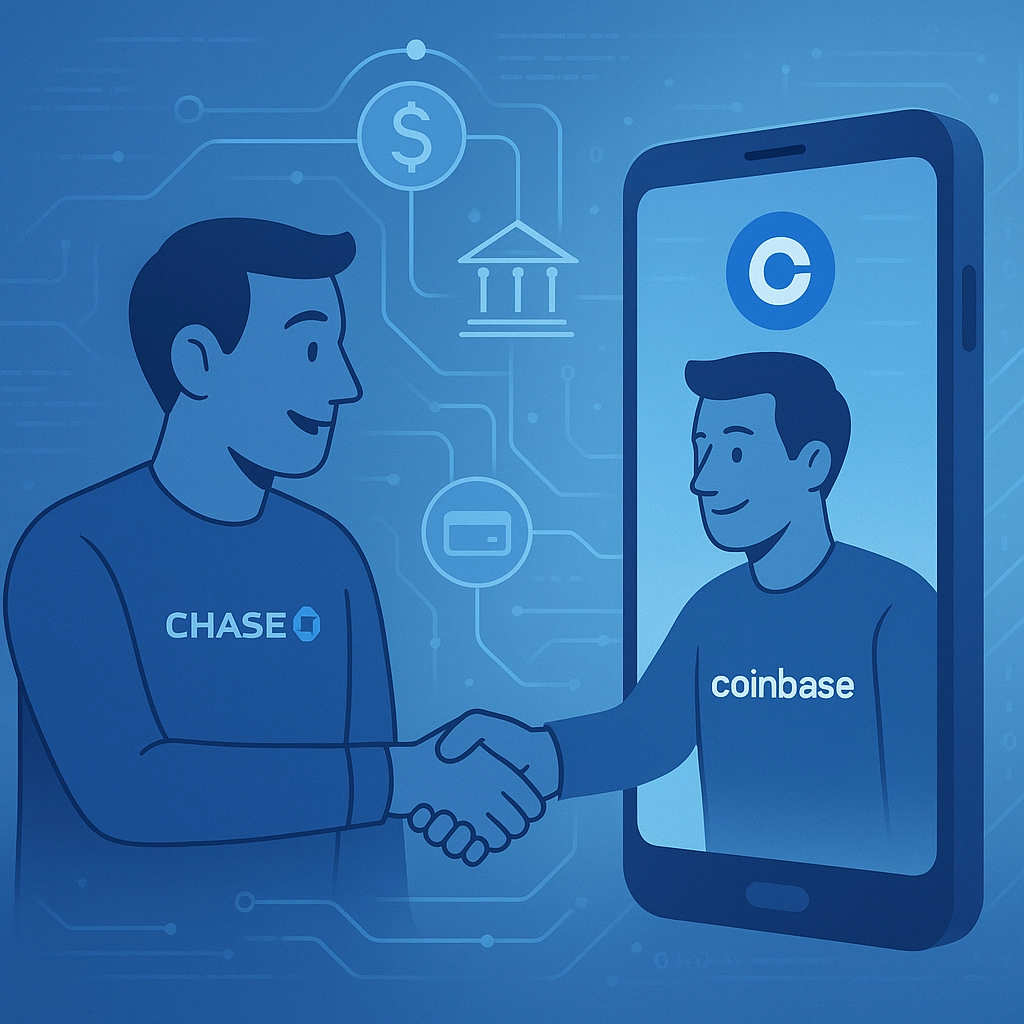
But wait—there’s even more under the hood. JPMorgan is also piloting its own digital token (called the JPMorgan Deposit Token, or JPMD) on Coinbase’s Base blockchain, laying the groundwork for bank-issued tokens to exist right alongside USDC and other stablecoins.
Stablecoins and Rewards: Why This Changes Everything
If you’ve ever shrugged at your credit card points, get ready to see them in a whole new light. For the first time, a major US bank is letting customers swap their reward points for a digital stablecoin—bridging loyalty programs and blockchain technology.
Why USDC?
USDC is a type of stablecoin, which means its value is pegged 1:1 to the US dollar. Unlike typical crypto assets (think Bitcoin or Ethereum), USDC doesn’t swing wildly in price. This makes it an ideal on-ramp for newcomers. With this new feature, Chase cardholders have a low-barrier, ultra-stable way to get started in the crypto economy, or just send digital dollars anywhere in the world instantly.
It’s also a huge vote of confidence in USDC itself, which is co-founded by Coinbase and Circle. By allowing points to be redeemed directly for a stablecoin, JPMorgan is, in effect, nudging millions of its customers to experiment with digital currencies—without the volatility or complexity that usually scares institutions away.
Loyalty Points Get a Makeover
Think about where this could go. Instead of points gathering dust, they become digital assets that can be spent, saved, invested, or even transferred peer-to-peer across compatible wallets. The days of rigid, single-purpose rewards could soon be over. We could start to see:
Tokenized rewards that can be traded or used on multiple platforms.
Partnerships between retailers, travel brands, and fintechs, creating giant ecosystems for loyalty value.
Rethinking Infrastructure: Banks Take the Wheel
This isn’t just a flashy customer perk. It’s a huge infrastructure play.
Traditionally, fintech apps connected to banks using aggregators like Plaid, which act as tech go-betweens to access transaction info or fund transfers. JPMorgan, though, is now building its own direct pipelines. By integrating directly with Coinbase through their own APIs, JPMorgan:
Gains more control over security, compliance, and data.
Tightens anti-money laundering (AML) and “know your customer” (KYC) processes.
Reduces the friction and risk associated with third-party data sharing.
This bank-first approach could become the norm, as other big banks look to keep consumer data in-house—but still provide cutting-edge crypto integrations.
On the blockchain front, JPMorgan piloting its own deposit token alongside USDC on the same public network (Base) is no small detail. It shows that banks aren’t just paying lip service to blockchain—they’re betting on a future where digital currencies move seamlessly between various issuers, wallets, and platforms.
Crypto Goes Institutional: Culture Shift
Let’s be honest: just a few years ago, JPMorgan CEO Jamie Dimon was famously anti-Bitcoin, calling it a “fraud.” Fast forward to today, and JPMorgan’s collaboration with Coinbase couldn’t signal a clearer change of heart—not just for one bank, but for the industry. This isn’t about chasing hype: it’s a calculated business move, enabled by growing regulatory clarity in the U.S. and a broader institutional embrace of blockchain technology.
Coinbase, once viewed as a simple exchange, is now positioning itself as a crypto “rails” provider for the entire financial ecosystem. This partnership proves that interoperability, compliance, and user-friendly design are winning over wary banks and payment giants.
The Payments Future: Interoperability, Tokens, and the End of Silos
Let’s zoom out. What does all this mean for the future of how we pay, get paid, and move money?
Tokenized rewards could soon be the norm. Imagine a world where points are issued, tracked, and exchanged as tokens on an open blockchain, and you can spend them just like cash—at more places, for more things, and (if you want) trade them or gift them with no hoops to jump through.
Stablecoin payments will move from niche to mainstream. With on-ramps as easy as turning points into USDC, and off-ramps back to dollars or goods and services, expect everyday payments (remittances, e-commerce, payroll) to start leveraging these new rails.
Multiple digital assets, one wallet: With JPMD and USDC both running on Base, we’re seeing the start of multi-asset digital wallets: a place where bank coins, stablecoins, and maybe even rewards tokens all live side by side.
Risks, Challenges, and Open Questions
Of course, it’s not all sunshine and innovation. There are some real concerns worth watching:
Overleveraging risk: Because Chase credit cards can now fund Coinbase accounts (including via rewards-to-USDC), there’s a new path for consumers to rack up debt to buy crypto—a classic red flag if speculative behavior spikes.
Centralization vs. Decentralization: As banks become major gatekeepers to digital assets, there’s a risk that the original promise of crypto—open, permissionless, decentralized systems—gets diluted by centralized controls and restricted innovation.
Security and privacy: Direct bank-to-wallet connections raise the stakes for data protection and compliance, putting pressure on both institutions to stay ahead of bad actors and regulatory scrutiny.
Systemic risk: With more value routed through fewer, bigger platforms, any major breach or operational error could have outsized effects.
The Bigger Picture: Convergence, Not Displacement
What’s becoming clear is this: the future of payments isn’t a zero-sum fight between “old” and “new.” It’s a convergence. Traditional banks and fintechs are figuring out how to plug blockchain, stablecoins, and digital tokens into systems millions rely on every day—without losing what works about existing infrastructure.
If you’re in fintech, consulting, or any tech-led business, this JPMorgan-Coinbase partnership is your signal. Watch for:
More banks following suit, issuing proprietary stablecoins or integrating third-party tokens.
Loyalty and payment platforms onboarding Web3 developers to design tokenized reward ecosystems.
New regulatory frameworks that close gaps between traditional finance and crypto-native products.
The bottom line? The wall between points, tokens, and dollars is coming down. In just a few years, “digital assets” will no longer be a niche—just a normal part of your financial toolbox.
Curious to know how these trends could play out in your business, or want help navigating the next wave of payments innovation? Reach out to us at Kian Jackson Fintech Consulting / Rivatech Consulting or check out more of our deep dives on fintech and crypto.
Let’s get ready for a future where your wallet looks nothing like it does today.
Comments