
The Billion-Dollar Blind Spot: Why False Declines Are Killing Your Growth

Updated: Mar 11
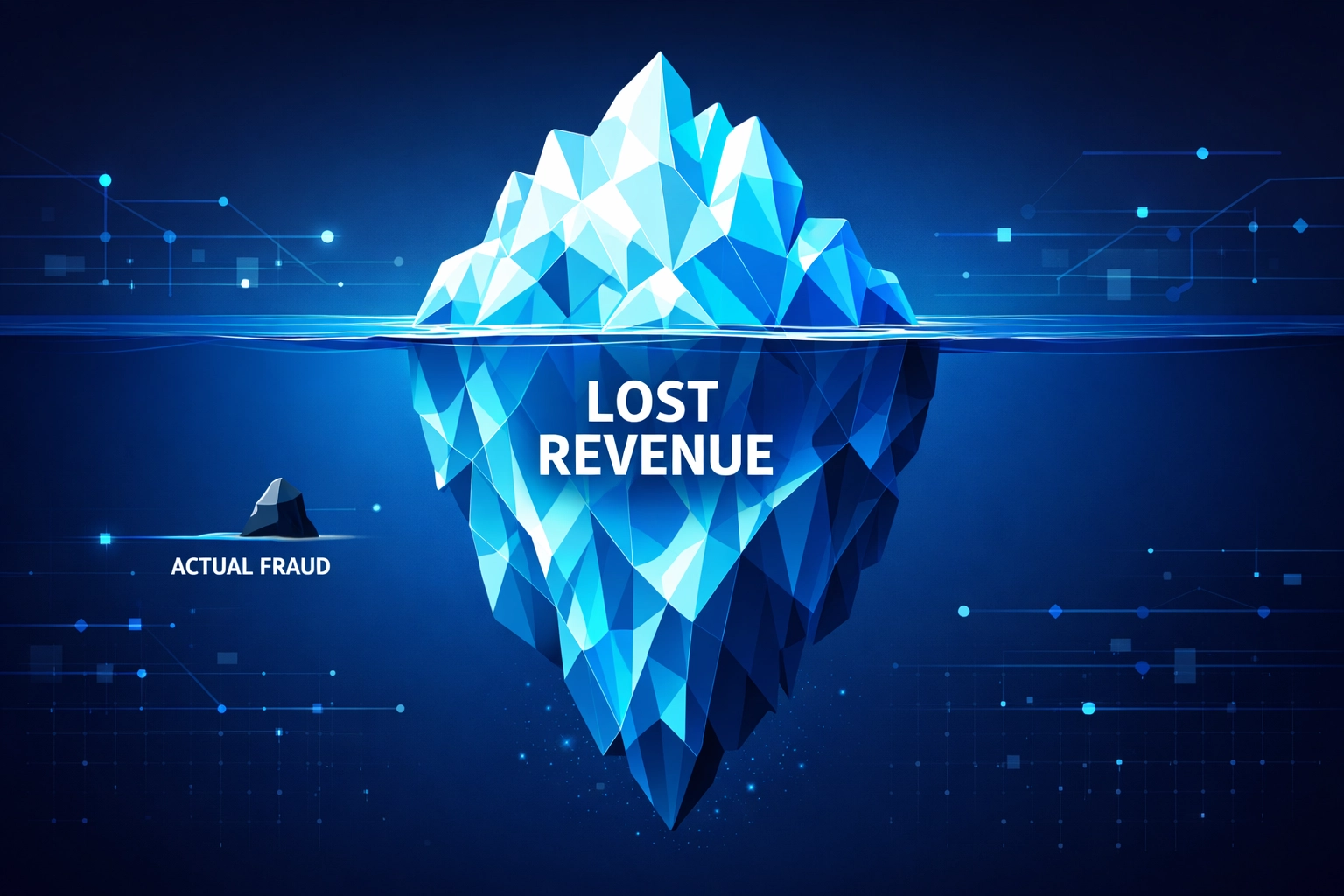
In the world of fintech, we spend a ridiculous amount of time talking about fraud. We build massive firewalls, deploy complex machine learning models, and obsess over every basis point of fraud loss. But while we’re busy guarding the front door against the $33.4 billion lost to actual fraud globally, we’re letting $443 billion walk out the back door in the form of false declines.
That is the "Billion-Dollar Blind Spot". According to research highlighted by Dwayne Gefferie in The Authorization Rate Battle, for every dollar a merchant loses to a genuine fraudster, they are losing roughly $13 because they accidentally rejected a legitimate customer.
If you’re running a high-growth business, this isn't just a technical glitch; it’s a silent killer of your Customer Lifetime Value (CLV). When a transaction is falsely declined, you don't just lose that single sale. You lose the customer, the marketing spend it took to acquire them, and your brand reputation.
The Math of Mismanagement
Let’s look at the numbers because they are staggering. Global losses from false declines, legitimate transactions that are rejected by the payment system, reached a point where they are nearly 15 times larger than actual fraud losses.
In 2023 alone, the industry saw $308 billion in global losses due to these errors. In the U.S. e-commerce market, the projection was $157 billion. When you compare that to the $33.4 billion lost to actual payment fraud, the priorities of the modern finance department look a bit skewed.
We’ve become so good at saying "no" to the bad guys that we’ve forgotten how to say "yes" to the good ones. This is the core of the "Authorization Rate Battle." It’s no longer about just processing a payment; it’s about ensuring that every legitimate dollar makes it through the pipes.
Signal Loss: The Great Data Strip-Tease
Why does this happen? In his deep dive, Gefferie points to a phenomenon known as "signal loss."
Imagine you’re a merchant. You know everything about your customer. You have their IP address, their device fingerprint, their five-year purchase history, and their loyalty status. You have high-fidelity, 4K-quality data.
But as that transaction moves from your checkout page to your gateway, through the card schemes (Visa/Mastercard), and finally to the issuing bank, that data gets stripped down. By the time it reaches the bank, the entity that actually decides whether to approve or decline the transaction, that 4K signal has been reduced to a grainy, black-and-white thumbnail.
The issuing bank sees:
Card Number
Expiry Date
Amount
A basic Merchant Category Code (MCC)
Because the bank is missing the "rich data" (the context), they play it safe. If anything looks even slightly out of the ordinary, like a high-value purchase from a new location, they hit the "Decline" button. The bank protects itself from the risk of a chargeback, but the merchant is the one who suffers the loss of revenue and the angry customer.
This is why modern payment giants like Adyen and Stripe are winning. They aren't just "pipes" for money; they are data companies. They work to preserve that signal or use their own internal networks to provide the issuer with the confidence needed to hit "Approve."
The "Do Not Honor" Trap (Response Code 05)
If you’ve ever looked at your payment logs and seen a "Response Code 05: Do Not Honor," you’ve encountered the "Check Engine" light of the payments world. It tells you that something is wrong, but it tells you absolutely nothing about how to fix it.
Code 05 is the ultimate catch-all. It’s what an issuing bank uses when their legacy system flags a transaction as "suspicious" but can't quite categorise why. It’s a lazy decline.
The problem is that Code 05 accounts for a massive chunk of all declines. Without better data sharing between the merchant and the issuer, you’re stuck in a loop of guessing. Are they actually out of funds? Is it a technical glitch? Or is the bank’s 20-year-old mainframe just having a bad day?
To solve this, leading fintechs are moving toward "Issuer Outreach" and enhanced data protocols like 3-D Secure 2.0 and ISO 20022. These protocols allow more data to flow alongside the payment, giving the issuer the "signal" they need to move past the generic Code 05.

Why a Decline is a Permanent Loss
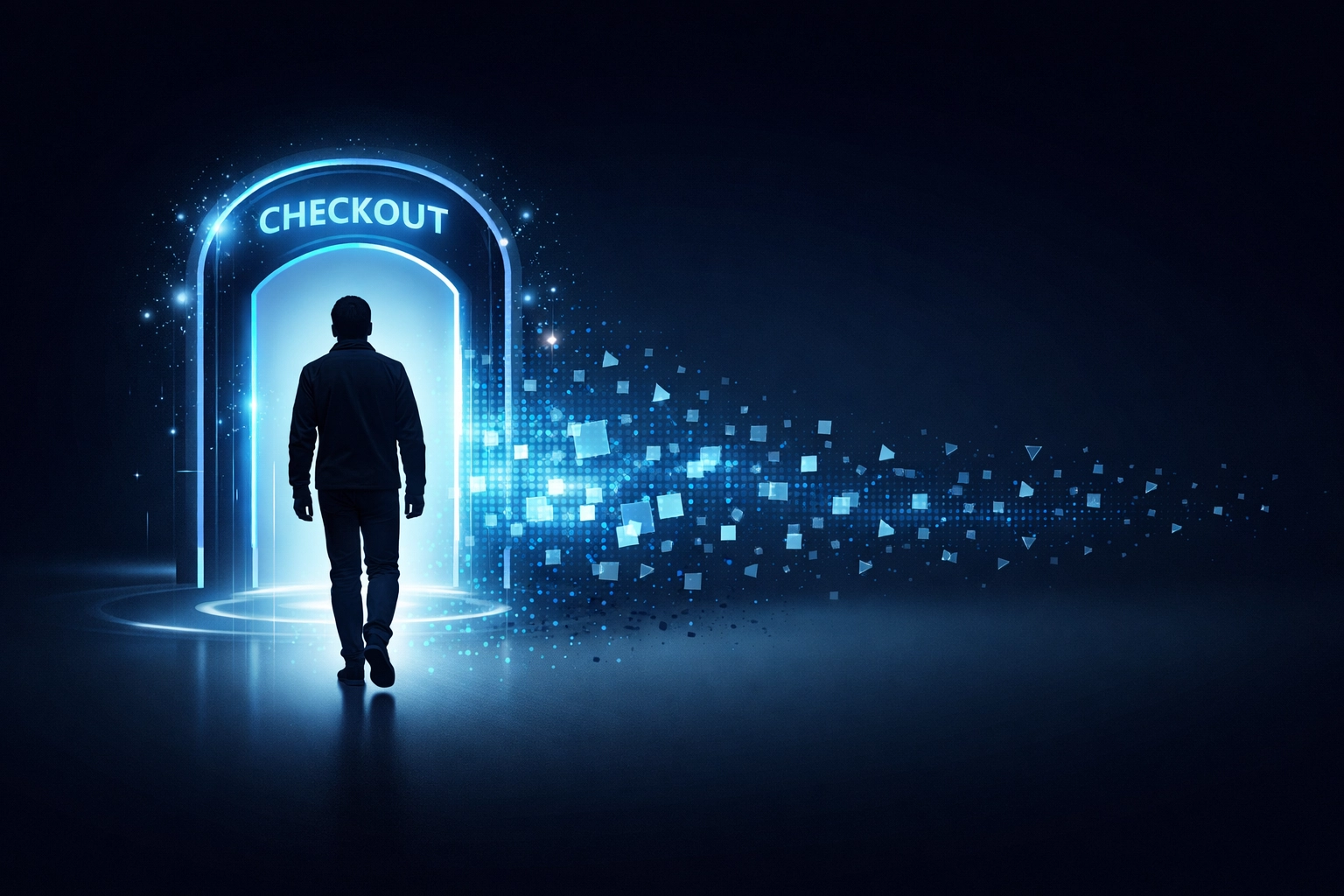
The immediate loss of a $100 sale is annoying. The long-term loss of the customer is a catastrophe.
The research is clear: customers have zero patience for payment friction.
56% of U.S. consumers have experienced a false decline in the last three months.
40% of Gen Z consumers say they will never return to a site after a false decline.
67% of e-commerce firms find it nearly impossible to recover a customer once a payment has failed.
In a world where customer acquisition costs (CAC) are skyrocketing, letting a customer slip away at the final inch of the marathon is madness. You’ve done the hard work, the SEO, the social ads, the product development, only to have a legacy banking system trip you up at the finish line.
This is especially true in the "Agentic AI" era. As we move toward automated revenue and smart POS systems, the need for invisible, high-success payments becomes even more critical. If an AI agent is making a purchase on behalf of a human, a decline creates a massive friction point that the agent might not be equipped to handle.
How the Leaders are Winning the Battle
So, how do you fix it? The industry leaders aren't just accepting these declines as the "cost of doing business." They are treating authorization rates as a core product metric.
Direct Acquiring: Companies like Adyen and Stripe often act as both the gateway and the acquirer. This reduces the number of "hops" the data has to make, minimising signal loss. You can read more about this in our look at the unbundling of Stripe.
Machine Learning Retries: If a transaction is declined for a technical reason (not insufficient funds), smart processors will automatically retry the transaction using a different route or at a slightly different millisecond to catch a different "window" in the issuer's system.
Network Tokens: Using tokens instead of raw card numbers doesn't just increase security; it increases "auth rates." Because tokens are updated automatically by the card brands, you don't get declines for expired cards if the user has already updated their details with their bank.
Local Acquiring: If you’re a global business, processing a transaction in Australia via a bank in New York is a recipe for a decline. The best players use local acquiring to make the transaction look "domestic" to the issuing bank.
Looking Toward 2026
As we look toward our 2026 payment tech predictions, the "Authorization Rate Battle" will only intensify. We are entering an era of "Account-to-Account" (A2A) payments and initiatives like the European Payments Initiative (EPI) with Wero. These new rails promise to bypass the legacy baggage of the card schemes entirely, potentially offering much higher success rates.
Furthermore, the shift to ISO 20022 means that the "signal" will finally be baked into the infrastructure. Instead of trying to squeeze data through a straw, we’ll be sending it through a firehose.
Turning the Blind Spot into a Competitive Advantage
If your competitors are losing 15% of their revenue to false declines and you’re only losing 5%, you have a 10% margin advantage without spending an extra cent on marketing.
The "Billion-Dollar Blind Spot" is the easiest place to find "hidden" revenue. It requires moving payments from the "utility" bucket to the "strategy" bucket. It means stop asking "How much does it cost to process this?" and start asking "How much are we losing by not finishing this?"
At Kian Jackson, we specialise in helping fintechs and high-growth merchants navigate these technical hurdles. Whether you're trying to decode your response codes or looking to optimise your global acquiring strategy, we can help turn your payment stack into a revenue engine.
Ready to reclaim your lost revenue?
Don't let legacy systems kill your growth. If you’re ready to dive deep into your authorization rates and stop the "Signal Loss," let's talk.
Connect with us at Kian Jackson or explore our consulting services at Riva Tech Consulting.
Let's make sure your "yes" actually means "yes."
Comments