
The 2026 Merchant Acquiring Playbook: From Commodity to Community

Updated: Mar 22
For over a decade, the merchant acquiring industry was defined by a race to the bottom. It was a game of basis points, high-volume processing, and commoditised services where the lowest price usually won the mandate. But as we navigate the landscape of 2026, that era is officially dead.
Today, the "Big 8": JPMorgan, Adyen, Global Payments, Worldpay, Fiserv, Nexi, Worldline, and Getnet: are no longer just processors. They have transformed into ecosystem orchestrators. Drawing from the strategic insights of Dwayne Gefferie’s The Payments Strategy 2026 Breakdown, it’s clear that the industry has shifted from providing a utility to building a community.
If you are a fintech leader, your 2026 playbook isn't about how cheaply you can move money; it’s about how deeply you can embed your platform into the merchant’s daily operations.
The Death of Commodity Processing
The commoditisation of payments reached its peak in 2024. By 2025, margins on pure processing had thinned to the point of transparency. To survive, the world’s largest acquirers realised they needed to pivot from being a "vendor" to becoming a "partner."
This shift is rooted in the move from transactional relationships to platform lock-in. When a merchant uses you just for processing, they can leave you for a 2-basis-point discount. But when you provide the operating system for their entire business, the cost of switching becomes prohibitive. This is the "Community" model: an interconnected web of services that makes the acquirer indispensable.
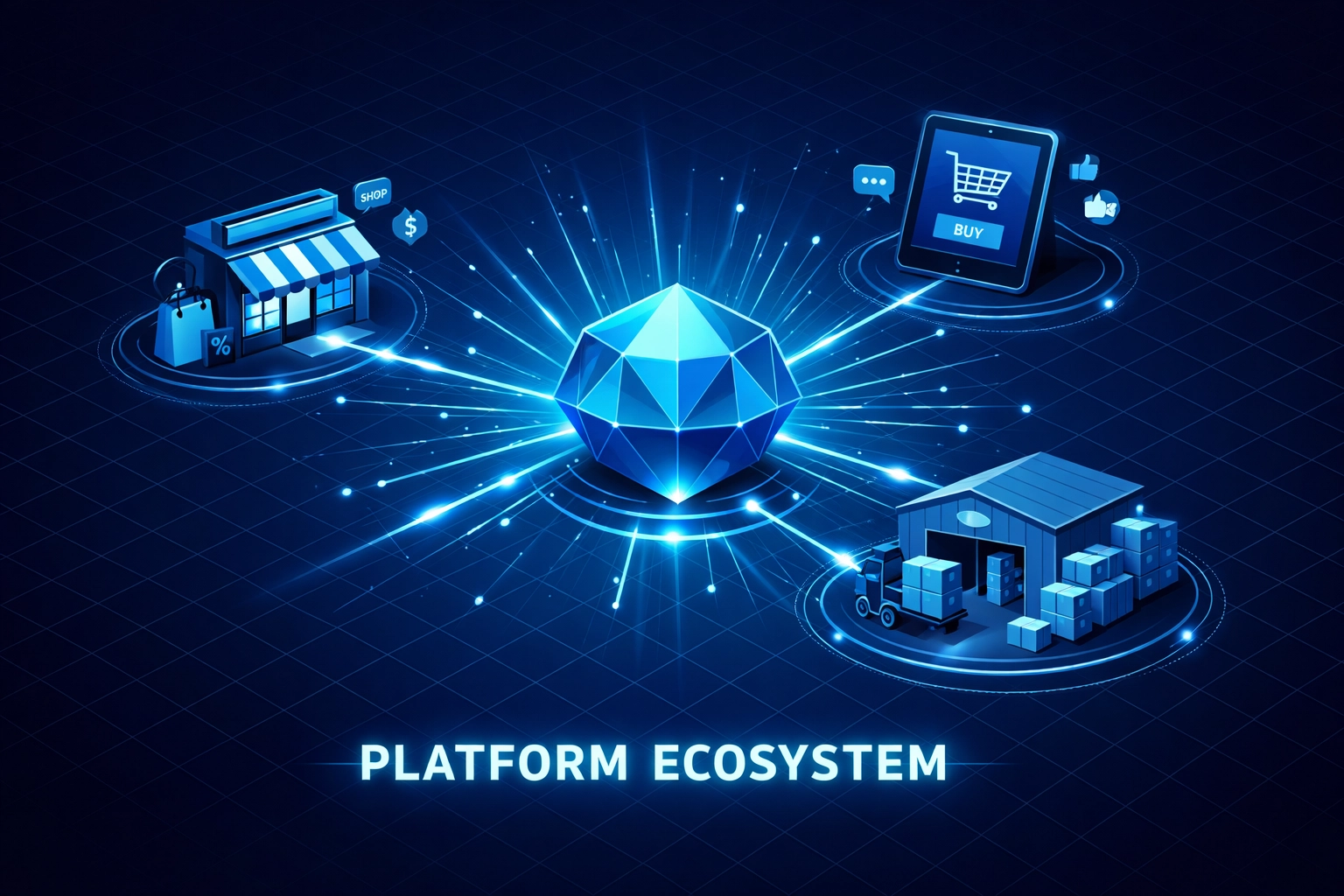
The "Big 8" Strategy: Platform Lock-in via Clover and Genius
Fiserv and Global Payments have led the charge in this transition through their proprietary hardware-software ecosystems: Clover and Genius.
Clover (Fiserv)
Fiserv’s strategy with Clover has been a masterclass in platform stickiness. By moving beyond the card reader and into inventory management, employee scheduling, and customer loyalty, Clover has effectively decentralised the bank. For a merchant, Clover isn't a "payment terminal"; it is the brain of the restaurant or retail store. This is a critical component of what we discuss in our 2026 payment tech predictions.
Genius (Global Payments)
Global Payments has followed a similar trajectory with its Genius platform, focusing on a unified commerce experience. The goal is "Single Platform" dominance: ensuring that whether a customer buys online, in-app, or in-person, the data remains in one silo.
Adyen’s Engineering Advantage
While others grow through acquisition, Adyen continues to win by maintaining a single, homegrown tech stack. This allows them to iterate faster on features like automated 3DS optimisation and real-time fraud prevention, which are essential for maintaining high authorization rates.
Agentic Commerce: The Next Frontier
Perhaps the most radical shift in the 2026 playbook is the rise of Agentic Commerce. As we've detailed in our analysis of how AI is making the checkout disappear, commerce is moving from human-initiated to agent-initiated.
In 2026, AI agents (representing both consumers and businesses) are increasingly responsible for negotiating prices, checking inventory, and executing payments. For an acquirer, this means your "customer" is no longer just a person with a plastic card; it’s a software agent with a digital wallet.
The Big 8 are currently racing to build the infrastructure that supports these autonomous transactions. Agentic commerce requires:
Programmable Payments: Settlement that triggers automatically based on smart contract conditions.
High-Velocity Identity Verification: Agents need to prove they have the authority to spend on behalf of a human.
Dynamic Pricing Integration: Real-time adjustments based on agent-to-agent negotiation.
For a deeper dive, check out our piece on Agentic AI and Smart POS systems.

Geographic Reshuffling: The US Invasion of Europe
A significant trend in the 2026 strategy is the aggressive geographic expansion of US-based acquirers into the European market. JPMorgan and Fiserv, in particular, have identified the fragmented European landscape as a prime opportunity for consolidation.
Historically, Europe was a fortress of local schemes and domestic champions like Nexi and Worldline. However, the push for the European Payments Initiative (EPI) and the Wero wallet has created a standardisation that, ironically, makes it easier for US giants to scale their unified platforms across borders.
We are seeing a "US-style" platform approach being applied to European merchants: offering them the same "Community" benefits (integrated lending, FX management, and loyalty) that were previously siloed by national borders. This cross-pollination is often spearheaded through innovation hubs, such as those seen in Irish Fintech.
The Authorization Rate Battle: The Billion-Dollar Blind Spot
One of the key lessons from Dwayne Gefferie is that the greatest source of "lost" revenue for merchants isn't fraud: it's false declines. In 2026, the best acquirers are distinguishing themselves by their ability to solve the "05: Do Not Honor" mystery.
While legacy processors treat a decline as a finality, the new playbook uses machine learning to retry transactions through different routing paths or by enriching the data sent to the issuer via ISO 20022 standards. By treating authorization rates as a product feature rather than a technical byproduct, acquirers like Adyen and Checkout.com are justifying higher premiums. They aren't selling processing; they are selling revenue recovery.

Moving to Community: Beyond the Transaction
The final piece of the 2026 playbook is the integration of "Social Loyalty." Merchants no longer want a separate loyalty app; they want their POS to automatically recognise their most active online fans and reward them in-store instantly.
Acquirers are now building social data layers directly into the payment flow. If a customer has been a brand advocate on social media, the Clover or Genius terminal recognises this via tokenised identity and applies a "fan discount" at the point of sale. This is the ultimate "Community" play: linking the digital social world with the physical transaction world. You can read more about this in our article on Social Loyalty and POS systems.
Summary: The Winning Strategy for 2026
If you are navigating the fintech space in 2026, your strategy must reflect these three pillars:
Platform Integration: If you aren't part of the merchant’s software stack, you are replaceable. Focus on vertical-specific SaaS integrations.
Agentic Readiness: Prepare your infrastructure for the rise of AI-to-AI commerce. The "checkout" button is becoming obsolete.
Data Sovereignty: Use ISO 20022 and advanced messaging to win the authorization rate battle. Every percentage point of "recovered" revenue is worth more than any fee discount.
The "Big 8" are moving fast, but their size often makes them slow to adapt to niche market needs. For startups and mid-tier players, the opportunity lies in building specialized "communities" that the giants overlook.
How We Can Help
At Kian Jackson, we specialise in helping fintechs and financial institutions navigate these complex strategic shifts. Whether you're looking to optimise your acquiring strategy, integrate agentic commerce, or defend your market share against the "Big 8" invasion, our expert consulting team is here to guide you.
Ready to future-proof your payments strategy?
Visit www.rivatechconsulting.com to learn about our bespoke consulting services or reach out to us directly to schedule a strategy session. Let's turn your payment commodity into a thriving community.
Comments